In the high-stakes arena of today's professional oversteer competition, success is not merely purely a function of raw torque or driver courage. Instead, it is now a multifaceted science which necessitates a scrupulous fusion of choosing a proven chassis, outfitting it with the most precise drift-spec hardware, and, most critically, understanding its real-time performance on the course through advanced vehicle dynamics analysis tools. This exhaustive manual acts as your blueprint from the very first idea of a competition vehicle all the way to the final telemetry-optimized adjustments that turn a powerful car into a consistent champion. We will delve deep into the precise engineering of chassis dynamics adjustment, illustrating how a modern vehicle dynamics tool like a dedicated telemetry system eradicates approximation and offers unparalleled visibility into your vehicle's true dynamics.
The cornerstone of any great drift machine is, indisputably, the chassis itself. Certain platforms have attained iconic reputation within the global drifting scene due to their natural weight distribution, strong construction, and the immense availability of performance parts available. Selecting the right platform is the primary and most crucial selection a driver will make. As an example, the BMW's E36 3 Series is widely regarded as among the greatest balanced cars for drifting of the modern era. Its excellent 50/50 weight distribution, alongside a RWD layout and robust six-cylinder powerplants, forms a car that is both forgiving for newcomers and extremely effective in the control of a pro pilot. The evolution of this lineage, the E46 model BMW, refines these attributes with a even more sophisticated frame, wider stance for enhanced stability, and still more turning capability as standard from the OEM. A distinct formidable option in the top-level arena is the C6 generation Corvette.
This V8-powered performance car brings a particular set of advantages to the sliding world, such as a lightweight aluminium chassis, a transaxle-style drivetrain component that helps create an excellent front-to-rear mass ratio, and the tremendous low-end power of a powerful LS V8 motor. This combination renders it an complete force on track, designed of entering and holding continuous angles with seemingly easy use of acceleration. For those desiring remarkable value, the Nissan 350Z stands out as a top-tier candidate. It is delivered from the factory with a robust body structure, a competent factory LSD, and the free-revving VQ series engine that delivers plenty of performance for mastering and progressing in the activity. Its newer version, the 370Z model, brings additional improvements in structural rigidity, suspension design, and overall engine power, solidifying its position as a popular choice among professional pilots. Further historic cars that deserve attention are the agile rotary-powered FC generation RX-7, the ubiquitous Nissan S13 240SX, the V8-powered SN95 generation Mustang, the modern BMW E90, and the tiny yet unbelievably fun and teachable Mazda MX-5. Each of these platforms offers a unique set of traits, complexities, and potentials, but they all possess the core elements necessary to become a capable sliding vehicle.
However, selecting the right chassis is merely the beginning. To unlock the full performance of every of these machines, significant changes to the steering system and chassis control systems are completely non-negotiable. This is where the domain of precision drift-spec parts becomes critical focus. The most most impactful improvement for a purpose-built competition vehicle is the fitting of a drift-spec angle modification kit. These sophisticated kits, like those engineered by performance brands like SLR, are created to significantly enhance the chassis's available steering angle. A factory production vehicle is severely constrained in how far its steering tires can pivot, a engineering limitation for daily driving. In oversteer driving, but, aggressive opposite lock is frequently needed to catch and sustain a slide. An steering kit replaces the OEM hubs, linkages, and often suspension arms with components that enable the front tires to reach angles beyond 70 or even 80 degrees, as opposed to a average stock setting of around 40 to 50 °.
This vastly expanded lock offers the operator with significantly enhanced command during a slide, making it much simpler to begin a drift, sustain it through a sweeping bend, and switch smoothly from one side to the other. The difference in controllability is truly profound. Combined with a correctly selected modification is the just as vital modification to the vehicle's suspension. Generic or even expensive road coilovers are simply not intended for the particular and extreme requirements of competitive oversteer. A drift-spec set of coilovers is paramount. These specialized suspension components have custom damping rates and spring strength that are tuned for the violent mass transition that is inherent of drifting. When a driver starts a drift, the car's mass is shifted forcefully to the front of the turn. Proper drift-spec suspension control this movement in a controllable manner, enabling the vehicle to settle rapidly and offering the driver accurate response through the controls and driver's seat. They furthermore allow for precise tuning of ride height, damping rate, and corner weighting, which are all fundamental elements of fine-tuning the vehicle's dynamics to a given venue or competition technique. Together, a top-tier steering angle kit and a correctly selected pair of drift-spec coilovers constitute the absolute mechanical base upon which all future optimization is constructed.
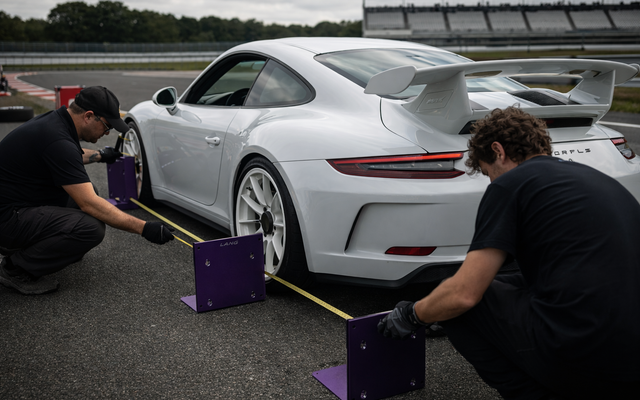
Once the core hardware is installed, the subsequent critical step in the project is the precise adjustment of the car's suspension geometry. This is the realm of vehicle alignment optimization, a methodology that can feel intimidating to the beginner but is, in fact, the secret to turning a assembly of fast components into a unified and consistent machine. The most critical aspect of suspension geometry for oversteer is undoubtedly negative camber. Wheel camber is the inclination of the wheel relative to the upright plane when looked at from the front of the chassis. If the top edge of the tire is angled towards the chassis, this is called negative camber. For oversteer driving, inward-leaning wheels on the front tires is widely employed and is regarded as critical. The logic is deeply linked to vehicle dynamics.
When a vehicle is going around a bend at high angles, the chassis rolls towards the outer of the bend. This lean causes the outside steering tire to diminish its best footprint with the tarmac. By introducing inward lean, the wheel is pre-leaned to account for this roll. As the car leans into the turn, the outside front tire flattens out on the track, optimizing its bite at the precise point when it is needed most for control. Typically, front axle camber settings for a serious sliding vehicle range from approximately -3 degrees to as extreme as -5 degrees or even beyond, contingent on the specifics of the chassis configuration, tire choice, and pilot style. The rear axle wheels also utilize inward tilt, but the settings are generally more conservative and more nuanced than the front axle. Overly aggressive camber at the back can make the car excessively loose and challenging to predict on throttle application, as it shrinks the usable contact patch of the powered tires during forward power delivery. Therefore, rear axle adjustments are often in the range of -1 degree to -3 degrees, striking a delicate compromise between giving enough cornering grip to help in entering and sustaining the slide while also keeping effective traction for acceleration the bend. camber angle is just one component of the more complex suspension geometry equation, which furthermore includes toe setting, self-centering steering, and steer correction correction.
Toe setting is the direction of the tires when looked at from above. Toe-in means the front edges of the tires are nearer together than the trailing edges, while toe-out means the reverse. For oversteer, a modest amount of front axle toe out is often used to improve the initial handling response, making the chassis feel more nimble and eager to begin a oversteer moment. Rear toe setting is generally set to zero or a extremely minute amount of positive toe to promote stability under power. Caster is the frontwards or rearward inclination of the steering axis when viewed from the lateral of the car. More positive caster enhances feedback and high-velocity solidity, and it additionally increases camber increase during cornering, which is extremely useful. Tuning these values is a complex dance where a adjustment to a single parameter can and will impact the others. The drift suspension tuning guide conventional approach for tuning a vehicle's suspension geometry for drifting has long been a time-consuming affair of guesswork and adjustment. A tuner or crew would apply a change based on a hunch, drive the chassis on track, depend on the driver's personal feel and comments, and then make a further adjustment. This loop would iterate again and again until the car felt "good" or the scheduled practice period ran out. This approach is not just exceptionally inefficient in terms of time and costs, but it is also deeply inaccurate.
Driver sensation is a infamously subjective data source, affected by numerous elements such as exhaustion, evolving track conditions, ambient heat, and merely the mood of the operator on that given run. What feels "tail-happy" on one lap might feel "tight" on the subsequent run, causing confusing feedback and frustrating adjustments. This long-standing challenge in chassis setup is vehicle dynamics tool exactly where contemporary engineering tools has intervened to completely change the process.
The advent and application of advanced vehicle dynamics tools has introduced a completely new era for building and refining professional drift cars. This new generation of platforms, showcased by groundbreaking solutions like modern telemetry hardware, function by physically capturing the live mechanical movement of the chassis as it is being driven on the circuit. Unlike using personal impression, these devices acquire objective data on essential factors such as suspension travel, individual tire rotation, G-force loading, lock position, and driver input application. This acquired telemetry is then processed by sophisticated applications that can visualize and analyze the metrics in a clear way. For the first time ever, drivers and teams can observe precisely what the car is exhibiting at any given point of a drift. This function changes the whole alignment optimization workflow. Think about the specific goal of setting the front axle negative camber for a particular vehicle. Instead of introducing a modification from -3 degrees to -3.5 degrees and then testing many passes to try and "feel" a change, a suspension tuning tool can provide immediate and clear feedback. The software can show visually how the tire's contact patch is behaving during the key stages of a angle: the initial flick, mid-corner, and transition. It can show if the current angle is allowing the outside front tire to maintain ideal contact or if the tire is over-stressed on its outer shoulder.
The tool can then suggest fact-based suggestions for adjustment. Perhaps the information shows that the outside front tire is still overworking its sidewall at -3.5 degrees of camber, suggesting that even more inward lean, say -4 degrees, might be beneficial. Conversely, the information might indicate that the tire is not reaching heat or that the inner edge is wearing too quickly, which could indicate that there is overly aggressive negative camber and a slight lessening back to -3.2 degrees would be more efficient. This standard of granularity and actionable insight was completely impossible in the days of exclusively seat-of-the-pants setup.
The impact of utilizing a dedicated suspension tuning tool extends much further than merely setting camber. It serves as an essential suspension tuning guide that is tailored to your particular car. When setting the shock absorber clickers on your coilovers, rather than depending on general tips or replicating another team's setup, you can utilize the data to analyze how the car is reacting in reaction to your changes. The software can display the wheel movement trace over a lap, highlighting if the coilovers are controlling the body movement effectively or if they are allowing the vehicle to become unsettled uncontrollably after a transition. It can assist in diagnosing challenges like bottoming out or topping out, allowing you to make educated decisions to spring preload, damping settings, or stance. This process translates similarly to the detailed process of car alignment tuning. In addition to camber, the software can offer insight into how modifications to toe and caster are affecting the car's handling during different maneuvers of a slide. For instance, it can assist you to ascertain the optimal amount of front toe out for your individual steering rack configuration and piloting style by measuring the response time of turn-in reaction and the predictability of the chassis at lock countersteer. This transforms the software an extremely useful drift suspension tuning guide that is dynamically calibrated by the real-world dynamics of your own vehicle on the tarmac. It shifts the complete endeavor from a subjective skill into a scientific optimization process.
Furthermore, the utility of a system like modern telemetry is in no way restricted to experienced tuners with extensive budgets. For the amateur enthusiast, it functions as an incredible force multiplier. It practically provides the builder with the insight of a expert race engineer without the associated cost. It speeds up the learning curve by providing unambiguous directions to challenges that would traditionally take seasons of experimentation to answer. A tuner can understand how their specific vehicle reacts to different adjustments, gaining a more profound understanding of vehicle dynamics in the endeavor. It additionally democratizes professional chassis dynamics concepts, allowing every enthusiast with the ambition to perfect their car to do so in a systematic and productive fashion. This is particularly significant in a activity like drifting, where setup expertise has in the past been a tightly held commodity among professional drivers. In the modern era, that capability can be in the toolkit of any serious enthusiast.
In conclusion, the path to constructing and dialing in the perfect competitive drift car is a multi-faceted endeavor that seamlessly combines classic hardware principles with cutting-edge telemetry tools. It starts with the informed pick of a legendary platform, then enhanced by the application car suspension tuning of essential performance components like maximum-angle steering angle kits and properly selected performance coilovers. The process then advances into the precision phase of alignment optimization, where parameters like camber, toe setting, and caster are carefully set to suit the chassis's modified geometry and the operator's specific needs. Finally, and what genuinely differentiates the contemporary process from the old ways, is the use of a sophisticated suspension tuning application. This system removes the approximation and inefficiency of only subjective adjustment by giving objective, actual data on how the car is really functioning. It functions as an unparalleled diagnostic aid, a actionable coilover setup manual, and a all-in-one vehicle dynamics tool. In unison, this integrated philosophy leads to that every element of the drift machine—from the pick of the car to the most minute tweak on the suspension—is perfected for ultimate success on the circuit. It embodies the complete evolution of the art of drifting, connecting raw pilot talent with data-informed suspension engineering to forge the perfect competitive vehicles imaginable.